Man Utd dressing room restrictions lifted as Michael Carrick scraps seven rules | Football | Sport
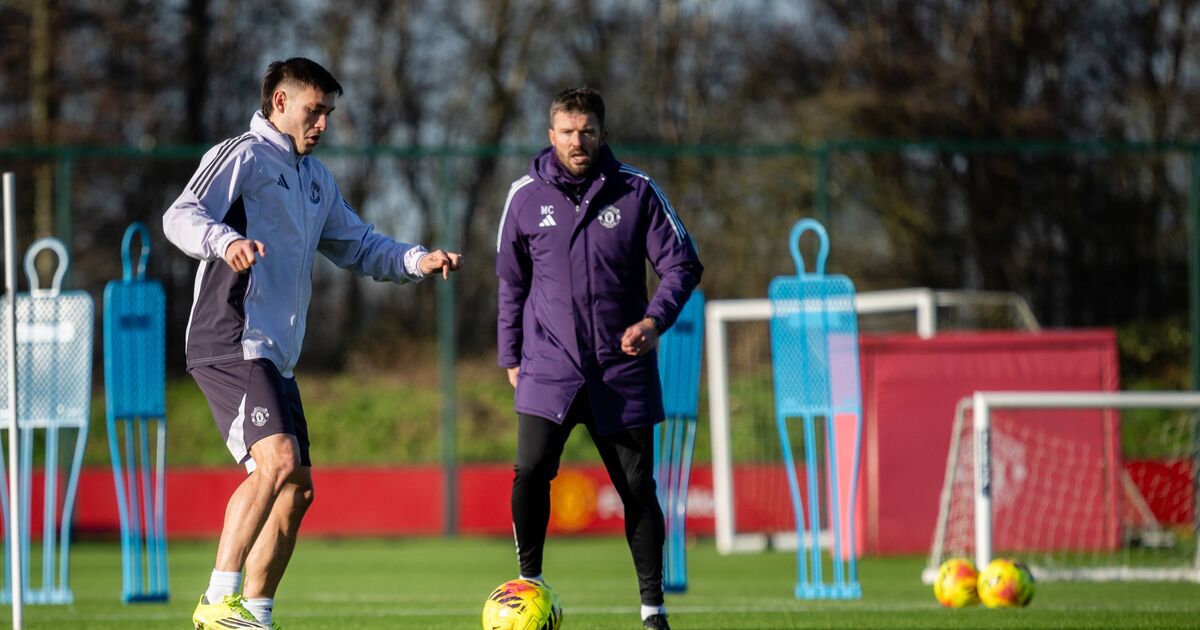
Michael Carrick has implemented several changes already at Manchester United (Image: Ash Donelon, Manchester United via Getty Images)
Michael Carrick’s reign at Manchester United has sparked a remarkable transformation both on and off the field in just three weeks. The former United midfielder was handed the interim head coach role until the end of the season last month.
He stepped in following the dismissal of Ruben Amorim, whose turbulent 14-month spell at Old Trafford ended after a draw away at Leeds at the start of January. In the short time Carrick has been in charge, the 44-year-old has managed three consecutive wins, reviving optimism among supporters and implementing a style of play that reflects the club’s ‘DNA’. A dominant 2-0 win in the Manchester Derby was followed by an impressive 3-2 away victory against table-toppers Arsenal, before snatching a dramatic late winner against Fulham last weekend. The Express Sport now looks at how Carrick has managed to deliver such swift results by examining the key changes he’s introduced following Amorim’s tenure.
Training the Day After Matches
Under both Amorim and his predecessor Erik ten Hag, players who were involved in matches were required to attend the training ground the following day for recovery sessions. Carrick has scrapped this rule, instead granting designated rest days within 24 hours of fixtures. Recovery sessions have now been pushed back to take place two days after the final whistle.
Tactical System & Selection
Amorim implemented a rigid 3-4-3 system and refused to deviate from his philosophy, even though his squad was better equipped for a more traditional setup. It forced the Portuguese boss to make controversial selections such as dropping academy graduate Kobbie Mainoo from his starting eleven.
A crucial element of Carrick’s transformation has been ditching the back-three system and reverting to a more United-like 4-2-3-1 formation, utilising blistering pace down the flanks. He has also restored fan-favourite Mainoo to the starting line-up.

Training was very different under Ruben Amorim (Image: Crystal Pix/MB Media, Getty Images)
Dressing Room Food Ban
Amorim banned food from being brought into the dressing room after emphasising the need to improve fitness standards among the players, potentially damaging team spirit in doing so. Carrick is understood to be dismantling that policy by transforming the dressing room into a safe place for his squad, where they can feel appreciated.
He has introduced a new philosophy whereby players must not leave the dressing room until they feel they have been spoken to and heard, by addressing players directly after games. Harry Maguire is reportedly being singled out as someone who will lead the charge and become a vocal presence.
This is in contrast to Amorim’s approach, where players were reportedly sent home after fixtures, usually without any dialogue from the manager, in order to let emotions fade before making snap decisions. He would then address his thoughts the following day as it gave him a chance to further analyse parts of the game and deliver a clear assessment once the emotion of matchday had died down.

Carrick is trusting players like Kobbie Mainoo (Image: Getty)
Coaching Limitations
Reports claimed that Amorim prevented his coaching staff from delivering complex tactical instructions to players in order to maintain simplicity. Carrick has changed the coaching dynamic, allowing for a different flow of information and instruction. The squad has responded positively to Carrick’s more direct involvement compared to Amorim’s style, which often saw him merely observing rather than having a hands-on approach.
Matchday Logistics
A subtle change Carrick has made is ensuring his players arrive at Old Trafford for matches slightly later ahead of kick-off. The different pre-match routine has been brought in to try to freshen things up, with Amorim being strict on earlier arrival times ahead of fixtures.
Ahead of the Premier League victory over City, the team bus arrived around 15 minutes later than usual. This deliberate shift by Carrick was so that the players would not be hanging around in the stadium waiting for kick-off, as well as ensuring his squad received a good reception.

Manchester United players now arrive later to matches (Image: Getty)
Training Session Structure
Carrick has reduced the duration of training sessions but ramped up the intensity of drills, with particular attention paid to individual coaching. During Amorim’s tenure, training sessions ran longer but were lower in intensity and had different tactical focuses.
Carrick is thought to have implemented this rule to stress the importance of performing at one’s best each day. Reports suggest the energy in training is now very different from that under Amorim, with Carrick aided by two new assistant coaches in Steve Holland and Jonathan Woodgate.
Focus on Youth
Amorim drew criticism from supporters and former players for appearing to overlook the club’s gifted academy graduates. While the Portuguese head coach did provide opportunities to youngsters such as Chido Obi, Harry Amass and Ayden Heaven, his public criticism of them, alongside Mainoo, struck many as bizarre behaviour for a United manager.
Carrick, in contrast, has taken a greater interest in giving young players a chance and the club’s academy as a whole already. He brought back youngsters such as Habeeb Ogunneye from loan and Joe Hugill to train with the first team. He’s also been spotted watching youth team matches – something Amorim faced accusations of neglecting – which will undoubtedly reassure academy prospects that a route to first-team football exists.