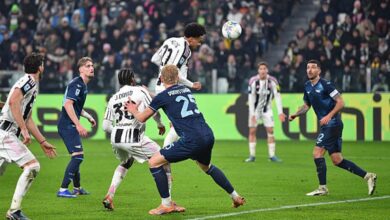
Are Arsenal really so boring? It’s time to bust the Premier League leaders’ flawed set-piece narrative

As the 2026 calendar year gains a foothold, a quick listen to television pundits or a read of the daily papers would have Premier League fans believe that the English top flight has been beset by a plague.
A return to the doldrums of yore has gripped the world’s greatest football league, they say, as Arsenal gallop to the Premier League title as standard-bearers of this rotten new movement.
But is this really the case? Are Arsenal on their way to becoming the most mundane Premier League title winners in the modern era? Has Mikel Arteta really unleashed a horde of set-piece fanatics who thumb their nose at open play and care little for possessional brilliance?
Come on, now. You aren’t really about to buy this narrative, are you? Nobody is denying the increased importance of set-pieces to Arsenal’s title chase, or disputing the tactical trend at Emirates Stadium engineered by Arteta this season.
Yet in a football meta where tactics evolve faster than ever before and winning is chased at all costs, Arsenal are little more than a product of a larger tactical evolution, one which certainly requires our attention but falls well short of threatening the sanctity of the beautiful game.
MORE: Arsenal injury list: Players out, potential return dates, predicted lineup
Arsenal’s set-piece focus is part of a wider tactical change
There’s no denying that there has been a marked shift in tactics across the Premier League this season, one that has seen Arsenal at the forefront of this change.
As of February 1, Arsenal have scored 17 goals from non-penalty set-pieces, the most of any club across the major European leagues this season, including a Premier League-leading 13 in domestic play.
This is undoubtedly part of a change across the English top flight. According to The Times on December 31, set-piece goals had been scored at a rate of 0.8 per game to that point in the Premier League, the highest that figure has been in at least a decade.
Another study by respected football analyst and podcaster Michael Caley on his Expecting Goals newsletter not only backed this claim, but went one step (well, actually about 50 steps) further, showing that open-play goals have bottomed out at just 1.79 per game, the lowest they’ve been since at least 2018.
Caley’s analysis concludes that the focus of set-pieces has specifically been corners and throw-ins, which have both resulted in a spike in attention. Teams have gone big on doing two key things to profit from these previously under-utilized situations: targeting the six-yard box exclusively, and crowding the goalkeeper.
The fear among fans is that if teams are playing with an increased focus on set-pieces, they consequently take fewer risks from open play, which disincentivizes the most exciting and entertaining parts of the beautiful game.
Playmakers like Martin Odegaard have unquestionably felt the effects of this shift. The Norwegian No. 10 excels in open play, his passing range and world-class vision sacrificed for a more risk-averse approach.
But have Arsenal truly sapped the life out of football? At worst, the numbers are far more inconclusive than the narrative would have you believe.
Are Arsenal really so boring?
By and large, Arsenal matches are still filled with plenty of excitement. The Gunners have generated 35.18 expected goals (xG) from open play in the Premier League this season,
according to Understat.com’s model, ranking them fourth with just a short gap to second. They are also third in the league for possession (57.9%), and touches in the opposition box (809), according to Opta data.
Sure, Arteta has identified a weak point in the system and exploited it. Their “block the goalkeeper and try to hit an Olimpico” corner routine has worked wonders in all competitions this season, and few defenses have shown much ability to resist.
But, no, it has not made Arsenal “boring.” Bukayo Saka is still fourth in the Premier League in successful dribbles. Gabriel Martinelli leads all Premier League wingers and attacking midfielders in xG per 100 touches. Arsenal’s place of third for shots through 24 Premier League matches would drop only to fourth if just open-play efforts were counted.
“I have heard completely the opposite… we are the most exciting team in Europe.”
Mikel Arteta doesn’t agree with people calling Arsenal’s style “boring” pic.twitter.com/BkTEP764Zo
— Match of the Day (@BBCMOTD) February 3, 2026
Most importantly, Arsenal have still scored 46 goals this Premier League season, second-most in the league behind Manchester City — the same Manchester City who have been summarily executed at times (remember Fulham?) for the consequential risk of such an open-play approach that simultaneously leaves them lethally exposed.
So then, we’ve resorted to complaining about how goals are scored? “Set-pieces are the weapon of the weak!” Lay off it. One look at Arsenal’s “Best goals of 2025” compilation proves open-play brilliance is far from dead at the Emirates.
Sure, Arteta has placed a significant weight on the shoulders of world-class defenders Gabriel and William Saliba. Who can blame the Arsenal boss for leaning on his greatest strength? Yet fans would cheer teams who defend with possession while simultaneously condemning those who defend with defense.
“Defend?” they might say. “How dare they! Champions don’t defend! They attack!” What, pray tell, happened to the age-old mantra of “defense wins championships?”
Even in Arsenal’s most entertainment-starved matches, there are reasonable explanations for the game state beyond just “it’s Arsenal, obviously.”
Take their recent Carabao Cup semifinal second leg against Chelsea — one of the most putrid games of the season — as a prime example. Arsenal came into that match with a one-goal lead to protect, and with Arteta hardly incentivized to loose the hounds, Liam Rosenior played straight into his hands as Chelsea similarly felt no urgency in opening up before the 70th minute.
Fans are likely suffering from not only the perceived lack of Arsenal’s entertainment, but also that of the opponent. Arsenal have thrived this season not by limiting shots, but limiting the concession of high-quality chances. Take Chelsea in that Carabao Cup second leg, for example: the Blues racked up 14 shots, but only 0.68 expected goals, a per-shot average of just 0.0486 xG — a laughably low number for a team that came into the match a goal down on aggregate.
76% – Arsenal have kept their opponents below 1 xG in 76% of their matches this season in all competitions (29 out of 38), the highest rate across clubs from Europe’s top five leagues.
Despite facing 14 shots tonight, they restricted Chelsea to 0.68 xG.
Control. pic.twitter.com/55FCw86qfO
— OptaJoe (@OptaJoe) February 3, 2026
Ultimately, Rosenior’s approach backfired for the Blues, as one might have predicted after they left themselves just 20 minutes to breach Europe’s best back line. Yet despite some criticism of Rosenior’s methods, it was Arsenal who were saddled with a lot of the blame for the ghastly events at the Emirates.
For every game like Chelsea, or the woeful 0-0 draw with Liverpool in early January, there are plenty of counter examples. Arsenal put forth a brilliant attacking display in a 3-1 Champions League win at Inter Milan. They got a beautiful open-play goal from Martin Zubimendi late in a 3-2 thriller at Chelsea in the first leg of their Carabao Cup semifinal. They thumped Tottenham Hotspur 4-1 in November’s North London derby with all four goals coming from open play. What more do you want?
Arsenal are evolving, like all great teams should
Just because what Arsenal are doing is new and runs counter to recent chaotic, goal-heavy trends, it doesn’t mean it’s necessarily a problem.
When Pep Guardiola first showed up at City and passed the Premier League to death, plenty of pundits cried about “the state of football” at that point, too. Fast forward 10 years, and Kevin De Bruyne is to have put outside the Etihad Stadium, while fans gleefully reminisce about how beautiful those free-flowing teams were to watch.
What Arsenal are doing is, thankfully, different than what La Liga is experiencing this season. Behind Real Madrid and Barcelona, entertainment value across the Spanish top flight has evaporated, and it has nothing to do with a focus on set-pieces. Instead, that league is suffering from a pace of play crisis, one that deserves further inspection to keep it from spiraling.
It’s also important to keep in mind what Arteta and Arsenal are up against. From a personal standpoint, the Spaniard has been dogged throughout his career — not without merit — as a manager unable to get the Gunners over the hump. He has steered Arsenal to three straight second-place finishes in the Premier League, and before this season, just one cup final (the 2020 FA Cup, which they won).
From a club perspective, Arsenal are part of a growing behemoth that shaves their margins across the season. In contrast to many top-heavy European pyramids, the Premier League has fostered unprecedented depth. In terms of financial might, mid-table Premier League sides are now at the same revenue levels as household European names like AS Roma. Forbes in 2025 ranked West Ham United, Newcastle United, Aston Villa, Brighton and Hove Albion, Fulham, and Crystal Palace all among the top 30 most valuable football clubs in the world, and that number is expected to climb even further in 2026. In total, 14 of the 30 clubs on that list hailed from England.
What this has created is a league environment that is more difficult on a weekly basis than anywhere else in the world. While teams like Barcelona and Real Madrid can rest players and still bill themselves as an attacking juggernaut playing opponents of varying talent levels, Premier League clubs are facing European-level competition on a weekly basis. There’s no room for rest, no ability to drop the level, and no chance of racking up stats. This comes at a cost.
Premier League fans have been spoiled in recent years by an era of pressing and chaos-maxing, two of the most entertaining styles football has ever seen. Goals were being scored at all-time levels — the five Premier League seasons with the most goals all happened in the last eight years (2023/24, 2024/25, 2022/23, 2021/22, and 2018/19) — an unsustainable rate that was always likely to come back down.
Thankfully, those who still wish to avoid Arsenal matches on account of a perceived lack of entertainment value shouldn’t have to wait too long. Today’s evolution of football tactics proceeds at a pace more rapid than ever before. Pressing was all the rage just three to five years ago, and it has effectively disappeared thanks to the likes of Roberto De Zerbi and Brighton’s “press me, I dare you” revolution.
Thanks to an increase in data collection and technological capabilities in analyzing the game, never in the history of this sport has the tactical meta shifted so fast. Just ask Arne Slot: the Liverpool boss walked the Premier League last season, but just three months into the 2025/26 campaign, he was forced to shift his tactics amid talk of facing the sack.
It’ll all come back around, just like it always does. Once defenses break down what is working on corners and throw-ins, and how to protect against it — or even use it to their advantage — teams will have no choice but to adapt once again.
How can the Premier League suppress set-pieces?
Digesting all of this, it’s still understandable that fans are concerned about the state of the game. It’s not hard to see how the set-piece revolution could theoretically threaten the sanctity of open play if things continue unabated.
The aim should always be to increase ball-in-play time and keep teams from being risk-averse to the detriment of the on-field product.
So, what are some steps that the Premier League can take to mitigate the flow of this supposed set-piece tidal wave?
In the interest of avoiding sweeping changes, which take years to develop and can be difficult to pass, a number of minor tweaks can be made in how matches are officiated to help defenses battle back against corner-focused teams.
Call more fouls on corner-taking teams bullying the goalkeeper
Protecting the goalkeeper is one surefire way to force set-piece-married teams to rethink their strategy.
According to Caley’s study, goalkeeper claims on corners have cratered by one third this season, suggesting that keepers are struggling to reach deliveries. Watching the most successful teams like Arsenal and Chelsea, it doesn’t take long to figure out why — they’re being blocked.
Referees have long allowed plenty of wrestling to occur in the penalty area while corners are being taken. It’s difficult for officials to call fouls and negate a quality attacking chance on account of some pushing and shoving. Yet a change in this approach may be required to give defending teams an edge. It would be jarring at first to see corners whistled away for fouls en masse, but this brute-force method might be necessary at this stage.
Tighten up throw-ins
Another refereeing tweak that can help is a return to strict adjudication of throw-ins. For decades, referees have relaxed their fix on throw-ins, allowing players a lot of lee-way with the positioning of throws, the time to take throws, and the technique.
This has allowed teams to gain a significant advantage from throw-ins in dangerous positions.
A firmer judgement, particularly with regards to foul throws, would stamp a lot of this out. It would be jarring for everyone involved, even more so than the above corner tweak, even to the point of awkwardness for officials awarding foul throws. But it would be a necessary change to clamp down on the number of dangerous long-throw opportunities.
Institute a free-kick timer
Teams have, increasingly, taken far too long to set up free-kicks and corner routines. That should be the case no longer.
A timer on how long a team has to deliver a set-piece chance would be useful to speed up this process. Not only would it nullify some of the advantage gained by perfectly orchestrating an attacking set-piece, it would also increase the amount of time the ball is in play throughout a match.