Iconic football stadium destroyed by storm as one end of pitch completely wrecked | Football | Sport
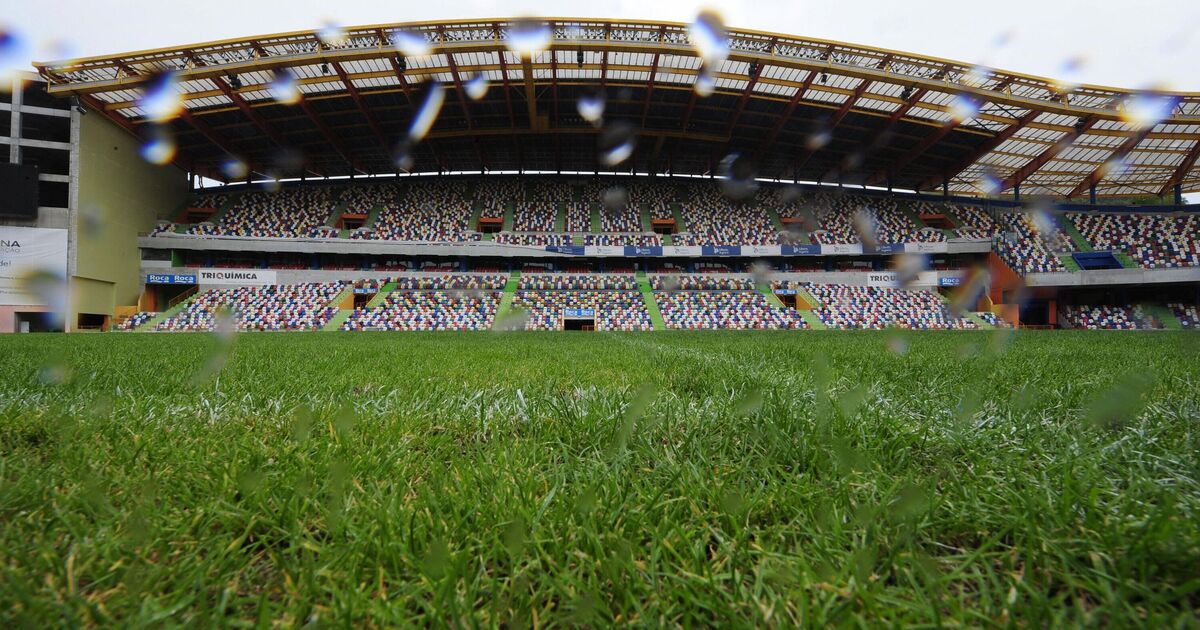
A stadium that once hosted matches at the European Championship has been left in ruins after a devastating storm wrecked one end of the ground. The stadium was built for Euro 2004, which was held in Portugal and won by underdogs Greece, but has only hosted international and domestic cup matches in the years since.
The Estadio Dr. Magalhaes Pessoa was one of the most eye-catching stadiums built for the Championship, with its striking multi-coloured design earning plenty of plaudits. For the 2004 Euros, it played host to matches between Croatia and Switzerland, as well as Croatia and France.
But fast forward 22 years, and the stadium was on the receiving end of Storm Kristin, which made landfall across central and northern Portugal last week. A maximum red alert was issued by the authorities, with winds having reached a devastating 110mph.
And after the dust had settled, it was clear the stadium, which is 80 miles north of Lisbon, had been devastated by the storm. One end of the ground had been savaged by the weather, with part of the structure having collapsed in on itself.
Debris has scattered all across the pitch, as well as the running track that goes around the stadium bowl. There weren’t any seats at the end that came off worse, given that the stadium hadn’t been completed during its original construction for Euro 2004.
For the tournament, a temporary stand was erected, which took the capacity up to 30,000 from around 24,000. Plans were released back in 2018 for the stadium to be completed with a renovated stand behind the goal. Work was scheduled to start in 2020 at a cost of around £6million, however, as a result of the pandemic, it was shelved.
The storms also caused fatalities in the region, with Mayor Goncalo Lopes saying: “The damage hasn’t been calculated yet, but it’s unpredictable to calculate the damage it causes to people’s lives. We have Dantesque scenes of churches without roofs, sports centres without roofs, many houses without roof tiles, houses and cars completely destroyed, cranes overturned. It’s a post-disaster scenario, very similar to what we usually see on television in a war.”
Meanwhile, a spokesperson from the Portuguese weather institute said: “This situation we sometimes call a small meteorological bomb. These small cores sometimes have an associated secondary zone of great intensity, which we call a ‘sting jet’. It’s a rare phenomenon, and unfortunately it fell in an area that had already been affected by Leslie and with the consequences that we saw.”